



5-HT Receptor
Serotonin Receptor; 5-hydroxytryptamine Receptor
5-HT receptors (Serotonin receptors) are a group of G protein-coupled receptors (GPCRs) and ligand-gated ion channels (LGICs) found in the central and peripheral nervous systems. Type: 5-HT1, 5-HT2, 5-HT3, 5-HT4, 5-HT5, 5-HT6, 5-HT7. They mediate both excitatory and inhibitory neurotransmission. The serotonin receptors are activated by the neurotransmitter serotonin, which acts as their natural ligand. The serotonin receptors modulate the release of many neurotransmitters, as well as many hormones. The serotonin receptors influence various biological and neurological processes such as aggression, anxiety, appetite, cognition, learning, memory, mood, nausea, sleep, andthermoregulation. The serotonin receptors are the target of a variety of pharmaceutical drugs, including many antidepressants, antipsychotics, anorectics,antiemetics, gastroprokinetic agents, antimigraine agents, hallucinogens, and entactogens.
5-HT Receptor Isoform Specific Products
-
5-HT Receptor
(563)
View all products
-
5-HT1 Receptor
(454)
View all products
-
5-HT2 Receptor
(476)
View all products
-
5-HT3 Receptor
(31)
View all products
-
5-HT4 Receptor
(12)
View all products
-
5-HT5 Receptor
(13)
View all products
-
5-HT6 Receptor
(86)
View all products
-
5-HT7 Receptor
(88)
View all products
All Product Categories
-
5-HT Receptor Inhibitors
(193)
View all products
-
5-HT Receptor Agonists
(546)
View all products
-
5-HT Receptor Antagonists
(680)
View all products
-
5-HT Receptor Activators
(18)
View all products
-
5-HT Receptor Modulators
(96)
View all products
-
5-HT Receptor Inducers
(2)
View all products
-
5-HT Receptor Controls
(19)
View all products
-
5-HT Receptor Ligands
(28)
View all products
-
5-HT Receptor Related Products (1733)
Related Products (1733)

-
Antibodies (1)
-
Related Compound Screening Libraries (1)
-
5-HT Receptor Isoform Comparison
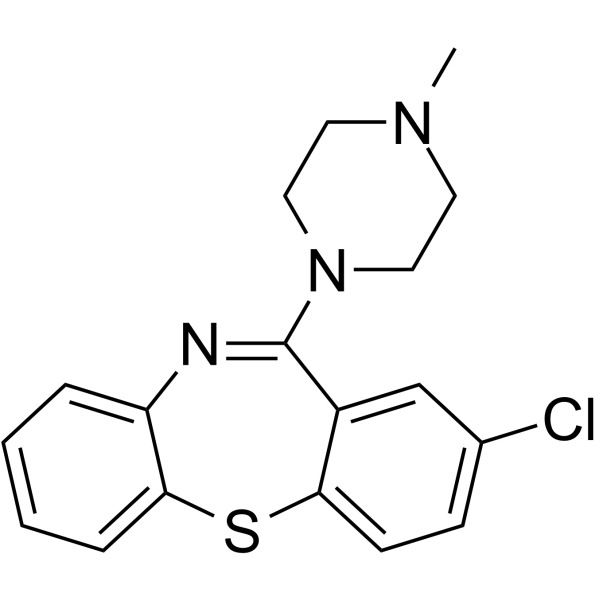
-
Desmethyl cariprazine-d8
 0 ImagesDesmethyl cariprazine-d8 is the deuterium labeled Desmethyl cariprazine (HY-100656). Desmethyl cariprazine is a major active metabolite of cariprazine, with activities at human dopamine receptors and serotonin receptors, showing a pEC50 of 8.90 at human D2 receptors, a pEC50 of 8.09 at D3 receptors, and a pEC50 of 6.28 at 5-HT1A receptors. Desmethyl cariprazine inhibits forskolin-induced cAMP production at D2, D3 and 5-HT1A receptors, and suppresses serotonin-induced Ca2+ release at 5-HT2B receptors. Desmethyl cariprazine is applicable to research related to schizophrenia, bipolar disorder type I and bipolar disorder.
-
Didesmethyl cariprazine-d8
 0 ImagesDidesmethyl cariprazine-d8 is the deuterium labeled Didesmethyl cariprazine (HY-100658). Didesmethyl cariprazine is an orally active, BBB-permeable metabolite of Cariprazine (HY-14763). Didesmethyl cariprazine is a partial agonist at the D2 and D3 receptors, full agonist at the 5-HT1A receptor, and antagonist at the human 5-HT2B receptor (Ki: 1.41 nM (human D2L), 0.056 nM (human D3), 1.7 nM (human 5-HT1A), 0.52 nM (human 5-HT2B)). Didesmethyl cariprazine dose-dependently inhibits the spontaneous activity of rat midbrain dopaminergic neurons.
-
Harmine (Standard)
 0 ImagesSynonyms: Telepathine (Standard)Harmine (Standard) is the analytical standard of Harmine. This product is intended for research and analytical applications. Harmine is a natural dual-specificity tyrosine phosphorylation-regulated kinase (DYRK) inhibitor with anticancer and anti-inflammatory activities. Harmine has a high affinity of 5-HT2A serotonin receptor, with an Ki of 397 nM.
-
(S)-Praziquantel
 0 ImagesS)-Praziquantel is a inactive distomer of R-praziquantel.
-
cis-Urocanic acid-13C3
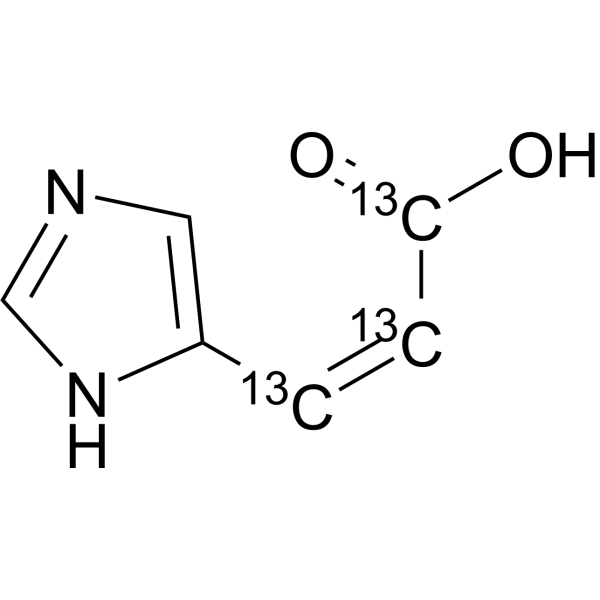 0 ImagesCat. No.: HY-113008ASPurity: 99.46%Synonyms: (Z)-Urocanic acid-13C3; cis-UCA-13C3cis-Urocanic acid-13C3 is the 13C-labeled cis-Urocanic acid. cis-Urocanic acid is a 5-HT2A receptor agonist. cis-Urocanic acid binds to 5-HT receptor with relatively high affinity (Kd=4.6 nM). cis-Urocanic acid is an immune modulator that induces immunosuppression by binding to the 5-HT2A receptor.
-
Harmine (GMP)
 0 ImagesCat. No.: HY-N0737AGCAS No.: 442-51-3Synonyms: Telepathine (GMP)Harmine (GMP) (Telepathine (GMP)) is Harmine (HY-N0737A) produced by using GMP guidelines. GMP small molecules works appropriately as an auxiliary reagent for cell therapy manufacture. Harmine is a natural dual-specificity tyrosine phosphorylation-regulated kinase (DYRK) inhibitor with anticancer and anti-inflammatory activities. Harmine has a high affinity of 5-HT2A serotonin receptor, with an Ki of 397 nM.
-
MT-1207
 0 ImagesMT-1207 is an orally active and selective adrenergic α1 and 5-HT2A receptor antagonist. MT-1207 shows IC50<0.1 nM, 0.15 nM, 1.40 nM and 0.27 nM for α1A, α1B, α1D and 5-HT2A, respectively. MT-1207 achieves an effective blood pressure (BP) reduction in the 2K2C rat model without damaging renal function. MT-1207 is a potent multitarget inhibitor with the potential for vasodilatation research.
-
S-15535
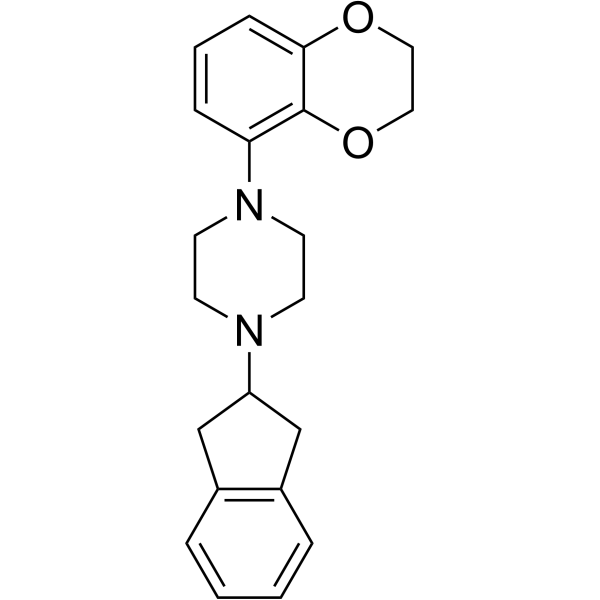 0 ImagesS-15535 is a highly selective 5-HT1A receptor ligand. S-15535 is an antagonist of postsynaptic 5-HT1A receptors and an agonist of presynaptic 5-HT1A receptors. S-15535 can be used in research on psychiatric disorders, such as anti-anxiety.
-
AVN-492
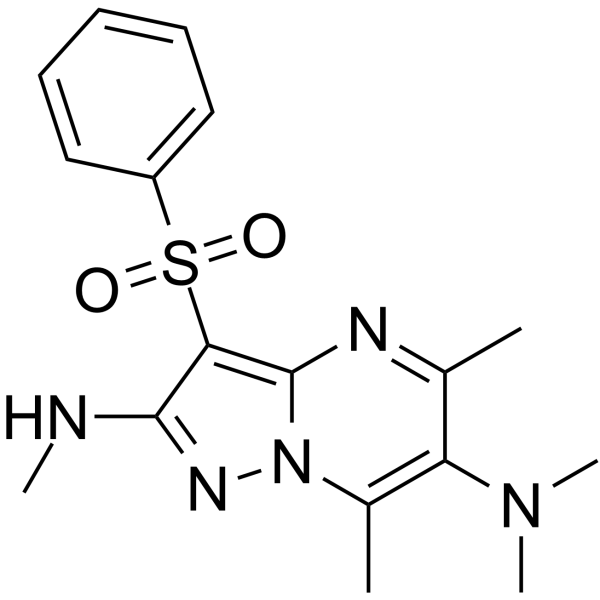 0 ImagesAVN-492 is a very specific and highly-selective antagonist with picomolar affinity to 5-HT6R (Ki=91 pM).
-
Clozapine-d8
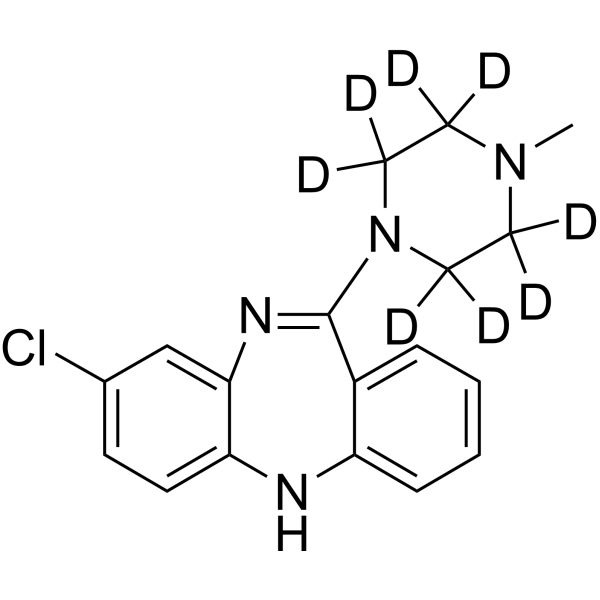 0 ImagesSynonyms: HF 1854-d8Clozapine-d8 is the deuterium labeled Clozapine. Clozapine is an antipsychotic used for the research of schizophrenia. Clozapine has high affinity for a number of neuroreceptors.
-
Aramisulpride
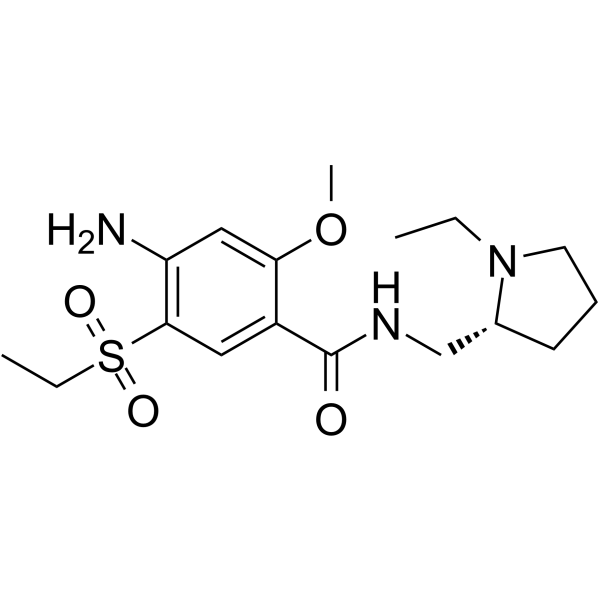 0 ImagesSynonyms: (R)-Amisulpride; (R)-Esamisulpride; (R)-DAN 2163Aramisulpride (R-(+)-Amisulpride) is the R-isomer of Amisulpride (HY-14545). Aramisulpride is a 5-HT7 receptor antagonist with a Ki value of 22 nM. Aramisulpride is a D2/D3 receptor antagonist with a Ki value of 140 nM for D2R and a Ki value of 13.9 nM for D3R. Aramisulpride can be used in psychiatric research.
-
Thioridazine-d3 hydrochloride
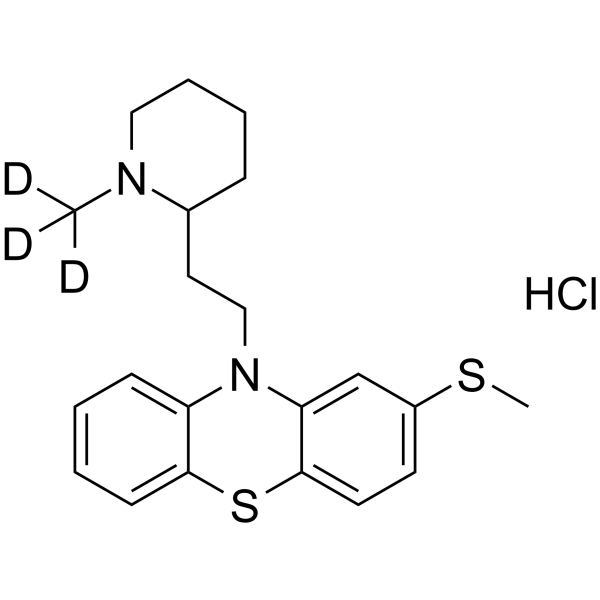 0 ImagesThioridazine-d3 (hydrochloride) is the deuterium labeled Thioridazine. Thioridazine, an antagonist of the dopamine receptor D2 family proteins, exhibits potent anti-psychotic and anti-anxiety activities. Thioridazine is also a potent inhibitor of PI3K-Akt-mTOR signaling pathways with anti-angiogenic effect. Thioridazine shows antiproliferative and apoptosis induction effects in various types of cancer cells, with specificity on targeting cancer stem cells (CSCs).
-
Alprenolol hydrochloride (Standard)
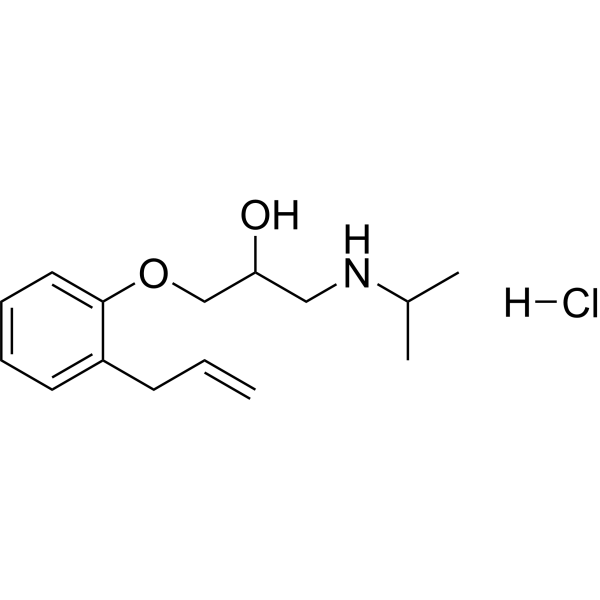 0 ImagesCat. No.: HY-B1517ARCAS No.: 13707-88-5Synonyms: (RS)-Alprenolol hydrochloride (Standard); dl-Alprenolol hydrochloride (Standard)Alprenolol (hydrochloride) (Standard) is the analytical standard of Alprenolol (hydrochloride). This product is intended for research and analytical applications. Alprenolol ((RS)-Alprenolol; dl-Alprenolol) hydrochloride is an orally active non-selective β-adrenoceptor antagonist and an antagonist of 5-HT1A and 5-HT1B receptors. Alprenolol hydrochloride is used as an anti-hypertensive, anti-anginal and anti-arrhythmic agent.
-
Peptide 401
 0 ImagesCat. No.: HY-12537CAS No.: 32908-73-9Peptide 401, a potent mast cell degranulating factor from bee venom, suppresses the increased vascular permeability due to intradermal injection of various smooth muscle spasmogens (histamine, and 5-HT).
-
Aripiprazole monohydrate
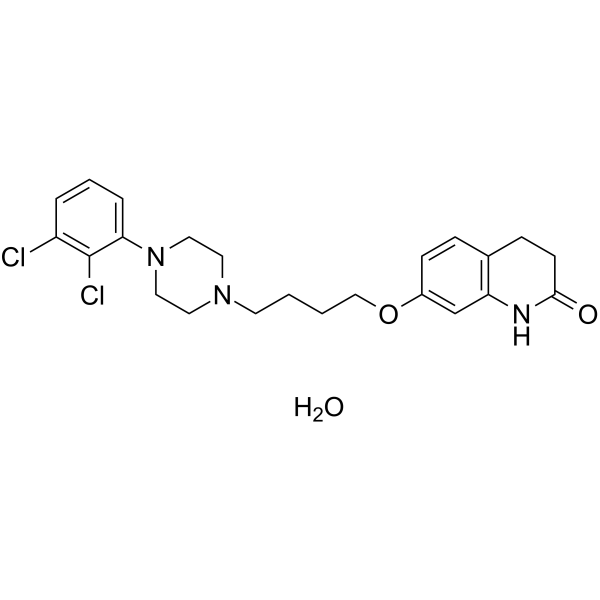 0 ImagesSynonyms: OPC-14597 monohydrateAripiprazole (OPC-14597) monohydrate, an atypical antipsychotic, is a potent and high-affinity dopamine D2 receptor partial agonist. Aripiprazole monohydrate is an inverse agonist at 5-HT2B and 5-HT2A receptors and displays partial agonist actions at 5-HT1A, 5-HT2C, D3, and D4 receptors. Aripiprazole monohydrate can be used for the research of schizophrenia and COVID19.
-
GSK163090
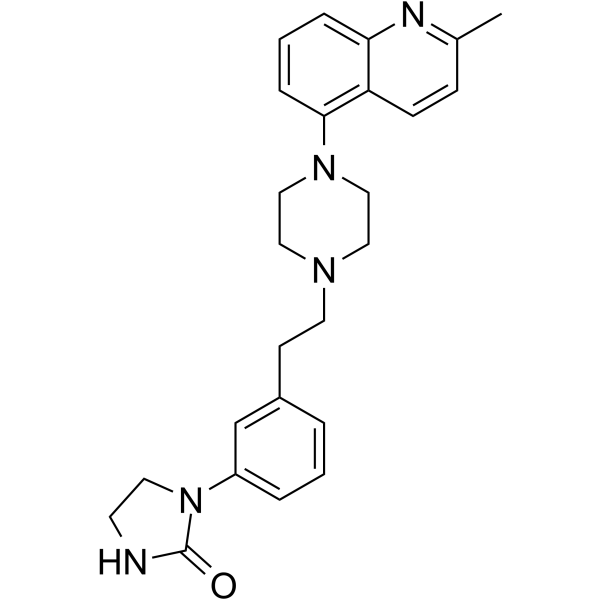 0 ImagesGSK163090 is a potent, selective and orally active 5-HT1A/1B/1D receptor antagonist with pKi values of 9.4, 8.5 and 9.7, respectively. GSK163090 inhibits the functional activity of serotonin reuptake transporter (SerT) with a pKi value of 6.1. GSK163090 has antidepressant and anxiolytic activities.
-
(R)-DOI hydrochloride
 0 Images(R)-DOI hydrochloride is a selective 5HT2A receptor agonist. (R)-DOI hydrochloride has anti-inflammatory, anti-oxidative stress, and lysosomal function-improving effects. (R)-DOI hydrochloride can be used for the researches of inflammation and neurological disease, such as Alzheimer's disease.
-
WAY208466 dihydrochloride
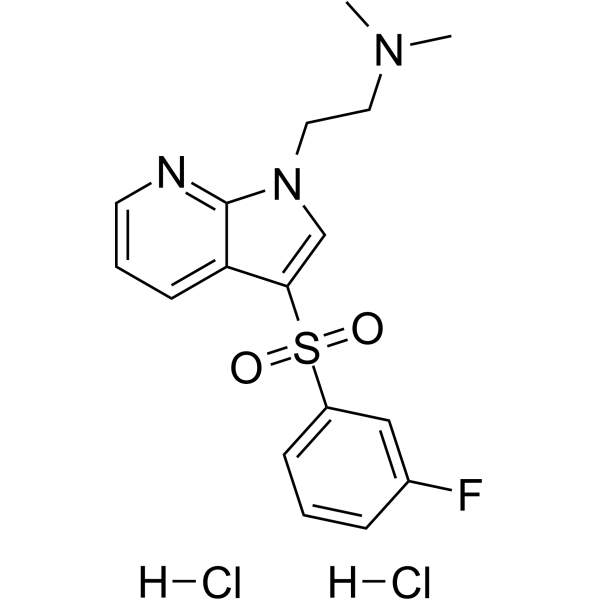 0 ImagesWAY 208466 dihydrochloride is a potent and selective 5-HT6 receptor agonist (EC50=7.3 nM for the human 5-HT6 receptor). WAY-208466 dihydrochloride elevates cortical GABA levels in rat frontal cortex. WAY 208466 dihydrochloride exhibits antidepressant and anxiolytic-like effects.
-
5-HT2A receptor agonist-6
 0 Images5-HT2A receptor agonist-6 (compound 47) is a selective 5-HT2A receptor agonist (pEC50=6.58).




